Showing posts with label Features. Show all posts

Thursday, 9 August 2012

Don't look back in anger...

Hard to imagine that it is all over. You wish for something for four years and when it arrives, it flies by like a freight train. The individual event finals of London 2012 were ridiculously unexpected for me (Deng Linlin beam champion?! - NEVER would I have predicted that). after a bit of settling time I thought I would consolidate my main thoughts after the individual competitions.

What The E Panel will remember fondly

Gabrielle Douglas - 2012 AA Champion


Already the issue of Gabs vs Vika has been hotly debated, and it is likely to be bitched about/staunchly defended for the next 4 years. It is impossible to discuss this without bringing in personal opinion and whilst I usually try to avoid extended chunks of personal rambling I will indulge myself a little here.
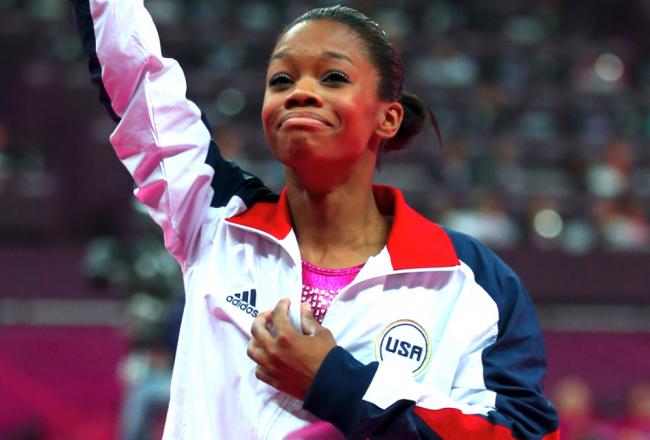

I love Gabby’s gymnastics. I think he has great form, lovely amplitude and a zesty quality to the skills she performs that few others managed. My real clicking moment with Douglas came at the 2012 American cup on her final skill: the split leap out of the double tuck which was the highest and most exciting I had, and have, seen.

I love Komova’s gymnastics too, and have done for a much longer period. I first saw Komova on some grainy youtube videos three years ago and was instantly mesmerized by her unusual and fantastic ability to combine difficulty with supreme execution. When asked in 2009 to predict the 2012 AA champion, I instantly tipped Viktoria Komova for the win.


Both Komova and Gabby suffered with the same problem: they had fantastic skills but seemed to suffer terribly with stage fright and often failed to perform when it mattered most. Both still have this in spades: Douglas is now the only AA champion not to possess any individual apparatus final medals due to edgy performances in both beam and bars finals. Komova fell afoul of the same curse.

The difference is that Gabby had a brilliant day when it counted. Komova didn’t. Although some of her performances were peppered with brilliance (her floor routine was the best of her life, and the best of the AA competition, making me wish she had made the EF) she was generally inconsistent and didn’t meet her potential on three of four events. Gabby on the other hand, although admittedly not floorless either, WAS the better gymnast that day (at least I think so) and that is why she won.

To sum up my general feeling, had Komova won, it would be a gold medal for the memory of her from 2 years ago. But the gold medal for Douglas was a recognition of the gymnast we see today.

Aliya Mustafina - 2012 UB Champion

Russia’s first WAG gold medal since Zamolodchikova and Queen Khorkina in Sydney 2000, and wasn’t Musty evocative of Khorki on their shared signature event?

Although patriotism tied me into routine for gold elsewhere, if I am honest I have loved Mustafina’s bars work ever since the 2010 worlds, which might as well be renamed the Aliya Mustafina welcome party. I love her execution and power, but more than this her originality. I never fail to be bowled over by her 1.5 twisting double tuck, not to mention her uncanny ability to nail it cold everytime.

There was a scary few moments when I thought my He Kexin prophecy may actually come true (I still reserve the right to be a little bit smug for calling it given she got silver in the end). Not that I dislike He Kexin, her bar work is undeniably impressive. But a win for Kexin would show an unfair lack of recognition of the developments bars has undergone in the last four years: changing from a three minute pirouette slog into an exciting connection and release led “Russian/Tweddle” style romp. 

Aly Raisman - 2012 FX Champion

OK, so I haven’t always been Aly’s biggest fan. Plenty of people haven’t been. However, for me Aly has been the most impressive gymnast of these games. The time has come to stop bemoaning toe point and artistry and recognize the positives: that Raisman should be recognized as one of the top USA team players of all time.
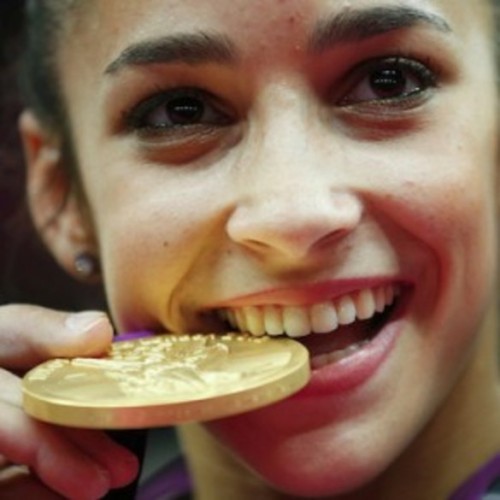
Sure, her floor isn’t my favourite to watch. However, that opening pass is so original, so risky and so brilliant that it is hard to argue with the verdict. Indeed, one of the best things about Raisman (and something that people rarely celebrate) is that she does NOT attempt skills that she can’t do...

Despite any complaints about presentation, Aly is no chucker and her floor composition is testament to this. Her leaps are all complete, her tumbles speak for themselves and my favourite thing is her spin - ridiculously simple, but she can do it.

My main thought is that I wanted her to leave these games with an individual medal. I would have preferred it to be AA bronze, but I love that she won here, although admittedly this is not just based on an impartial view of the routines themselves.

Beth Tweddle gets her first Olympic medal on her final day of Olympic competition

I won’t do my usual Tweddle gush. It is clear what I think about her and her routine. I am just thrilled she managed to pull it off and intensely relieved that she moved up a place from Beijing.

Things The E Panel would rather forget

The vault final

OUCH. It began with a crash and ended with open mouthed shock. This vault final was a perfect example of how nothing can be predicted at the Olympic level.


I cannot even imagine how Maroney must feel. The one time she crashes a vault in competitive memory and it comes in the event finals of her signature apparatus. This is a great shame, as everyone is in agreement that Maroney is undeniably the best vaulter in the world. However, as always, it is not enough to be able to do the vault well: it has to be done well on the night, and this wasn’t. Really, she should be happy to have gotten a silver with a fall.

On an impartial level, sweeping aside any bias towards Maroney, this final does little for vault as an event. Two Olympics in a row, and both since the introduction of the open ended code, have seen crashed vaults make the podium. It isn’t really the direction we should be moving in, and I think harsher penalties for falls are needed.

There is a potential silver lining however: This failure may stimulate Maroney to continue competing. I would love for this to happen.

Sandra Izbasa FX EF

Falling at the final hurdle on a routine that should certainly have been medal worthy is not how I wanted Sandra to end her second Olympics. I guess the unexpected vault gold should take the sting out of this somewhat, but it took the pop out of a final which I had been looking forward to for a year. 

Beth's Dismount

So she got the bronze, and for that I am grateful. However, I wanted gold for Beth, or failing that at least the silver. Mainly, I wanted her to beat He Kexin, and she couldn't.

The reason was the dismount. Again. Two Olympics and two giant steps from a double tuck variation. I am unbelieveably glad it didn’t knock her down into fourth - the last few routines of that final had my heart racing at dangerous levels. 

Tie Breaks

...A full article to follow

Roll on Rio. 


Friday, 22 June 2012

Olympic Countdown: The E Panel's top three Olympic WAG Bronzes


Svetlana Boginskaya, AA bronze, Seoul 1988


The first of the two great Svetlana’s (both similar in their statuesque presence, exaggerated presentation and diverse fan reaction) became a more exaggerated figure as her career continued. When Boginskaya’s name is first mentioned, a lot of people might conjure an image of her competing at the 1992 Barcelona Olympics, standing perhaps next to eventual AA champion Tatiana Gutsu.

But 1988 was her real AA performance, I think. Overshadowed by the head to head battle between Silivas and Shushunova, Bogi just got on with what she had to do and wowed us with wonderful performances, particularly on floor exercise.

More poignant, for me, is that I often thought Svetlana shined most as a compulsory gymnast, and the Seoul Olympics was the last AA competition before the introduction of new life.  One of the great robberies of that Olympic Games is that Bogi’s compulsory floor shared a score with Shushunova’s. Please.


Although I always loved Boginskaya, it is undeniable that the time between 1988 and 1992 brought a marked deterioration to her work. This might seem like an odd choice of words, given that the problem was mainly a lack of upgrades (most of her routines are virtually identical during this time period). Bogi lost the ability to keep up, and hence many think she began to coast on overscoring.  However no one could argue that this was the case in Seoul, and that is why this performance makes my top three Olympic bronze medals. 

Elena Produnova, BB Bronze, Sydney 2000


Often the legends don’t grace the medal records. I would be willing to be that Produnova’s name is mentioned more in gymnastics conversations, debates and memories than someone Like Gina Gogean, yet Produnova has three individual World and Olympic medals (of which this is probably the most prestigious) and Gogean has fifteen.

I would suggest that this is because the innovator is not always awarded. In some cases maybe the code hasn’t caught up with new approaches enough to fully reward them (although she put the double front vault to her feet in the 1999 event finals, she finished outside of the medals), or often taking the risks means taking the falls too.

Although Produnova was wonderfully unique on all apparatus (competing a bar routine during which she never separated her legs is one example) I always preferred her on beam. Her power and ingenuity were wonderful, and although the 1997-2000 quad is known for its lack of decent flight series on beam (apart from some notable examples), her routine in the EF was wonderful and justly rewarded with an individual Olympic medal.


The main reason I love her beam is her ability to stop all that flipping energy into a stone cold, stuck landing. Incredible. 

Dominique Dawes, FX Bronze, Atlanta 1996


Dawes epitomizes 90’s gymnastics, for me anyway. Big flight series, a 1.5 yurchenko vault, good bars and a strong double layout.

Yet she is another gymnast whose legacy and impact is betrayed by a lack of metal to back it up. In this case, though, the problem is entirely within Dominique’s head.

Shannon Miller is one of my ultimate favourites, and I believe she truly deserves her world titles. This is because there are two sides to gymnastic success: the things you can do in practice and the things you can do on the day. If one translates directly into the second, then you do well. If it doesn’t then you don’t, and that is that. However, there are times when you HAVE to acknowledge how close someone came or how sad a certain mistake was. For Dominique, this didn’t happen just once. It happened THREE TIMES in a World/Olympic AA competition where she could easily have medalled.

Obviously the most famous of these is her floor routines during the AA in 1996. There are just too many sad aspects here: the home crowd, the fact that her hardest pass was over, the fact that the fall came on the classic codewhore pass 2.5 punch which she had not struggled with historically.

The final insult, though, is the medal itself. Not only did Dawes have to accept that her mistakes cost her an individual AA medal on home soil, her bronze on floor became her only individual medal serving as a constant reminder of her capabilities. Still, it gave Dawes a well deserved individual Olympic record.


This is why Dawes made my top three: the interesting mixture of sadness and victory in a single medal. 


Tuesday, 8 May 2012

Hybrid Vigour


While the individuality and subjectivity of gymnastics is one of the sport’s greatest assets, with it comes an imbalance of excellence amongst its competitors. In running, whoever runs the fastest wins. In javelin, whoever throws the furthest wins. In gymnastics, though, there is a diversity of talent so great that gold and silver medallists on a discipline can resemble competitors in different sports.

The result is this: there is rarely one competitor who has it all. There may never have been a gymnast who was without weaknesses that were (or are) better performed by other competitors. In avoidance of writing a dull Euros anticipation, and to satisfy a desire to write something a bit flippant and fun, I got to thinking about “building” perfect gymnasts from the components of real life competitors (don’t worry, this doesn’t involve any hypothetical dismemberment).

If you could combine favourites to fill in their weaknesses, who would you put together?

Jordyn Wieber's power with Li Xuan’s leaps and lines and Lilia Podkopayeva’s forward acrobatic ability


I love Jordyn Wieber. Her power is really impressive and on the whole, her form is good too. In Tokyo, Christine Still remarked of Wieber: “she seems to have so much time in the air on her leaps”. Youtube commenters seemed to take issue with this, possibly because Jordyn is not a classic graceful gymnast with whom leaps are most associated, but she does have the ability to generate a lot of height from nowhere which makes her leaps pretty impressive.

However, she doesn’t have the classical grace and flexibility that many others have had. Liu Xuan competed some of my favourite beam leaps of all time: amazing flexibility, grace and poise without being as waifish as other competitors. A dash of Liu Xuan into Wieber’s beam leaps would take her beam work from great to exceptional, in my humble opinion.

This is too beautiful for any caption to do it justice.

With a very secure Amanar vault, a history of top shelf bars dismounts and a double double on floor, Jordyn is not what you would call acrobatically challenged. She does, however, famously struggle with forward acrobatic elements. This weakness goes some way to explain her lack of second vault and the reason for no forward giant work in her bars set. Indeed, her only regularly competed forwards acrobatic skill is a punch front layout from a 2.5 twist on floor: an element that has been far the most inconsistent piece of gymnastics in her repertoire.

One of Lilia’s many outstanding talents was a plethora of forward acrobatic skills; not least on floor, where to this day her forward tumbling series look the most solid and secure. With even a hint of Lilia’s forwards ability Jordyn would have many more secure skills to choose from.

Ali Raisman’s difficulty and solidity with Anna Pavlova’s dance and execution


A few years ago everyone seemed to be pretty fond of Raisman. She had some exciting skills, a nice attitude, but most of all a stunning consistency (on all but bars) that made her appear far more experienced than she actually was. Sadly, a lot of the internet community has gone a bit cool on Raisman recently, most likely because of Jana Bieger syndrome: upgrading difficulty before mastering execution, something which turns a lot of old school gymnastics fans right off. Despite this, the fact remains that Raisman performs some fantastic gymnastics very solidly and cleanly.


Conversely, Anna Pavlova is a gymnast who seems to be universally loved (or at least pretty universally non-hated). Her career is one marred by inconsistency and a lack of difficulty, but characterised by amazing attention to detail. Her presentation and dance are frequently cited as the amongst the best of modern times, with her Beijing floor routine frequently used as an example of artistry over difficulty. If Raisman could perform her skills with the execution and poise of Pavlova, she would be a formidable competitor. She can keep her own twisting form, though.

A blast from the past: Mo Huilan with Gina Gogean’s consistency

Mo Huilan is up there with Cheng Fei for the most well known and well celebrated Chinese WAG gymnasts; but unlike Cheng, Mo never really capitalized on her potential. Sure, she won a vault silver in 1996 and the beam title in 1995. However, here was a gymnast whose routines on bars, beam and vault were not only good: they would have contended for gold. Mo could have left Atlanta with an AA medal and three EF medals. But she didn’t. Why? Because she was always held back by inconsistency.

Gina Gogean’s career tells a very different story. The statistics tell is that Gina is one of the most successful female gymnasts of all time (she has 20 world and Olympic medals in her cabinet), however, you would struggle to find many fans who would list Gina amongst their all time favourites. Why? Because Gina’s medals were won through a rock solid consistency and an amazing ability to perform in the most stressful of situations, not for their originality or ingenuity.

Together, they would make a stellar combination of original, beautiful and difficult gymnastics performed with a rock hard consistency.

Beth Tweddle with Jordyn Wieber’s confidence and expression

Beth is a fantastic bar worker, and a brilliant tumbler. This is known. What is also known is that she has always been lacking in the artistry and expression department. Unlike previous examples this is not a case of execution: Beth is a very clean gymnast, with beautiful toe point and good form. This is a case of musical interpretation and the presentation of choreography.


I have mentioned before on this blog that Beth should draw inspiration from people like Chellsie Memmel, whose floor performance at the 2008 Olympic trials is one of the most memorable American routines of all time (for me, anyway). I say Chellsie specifically because as an athlete, she is not dissimilar to Beth. Neither Beth nor Chellsie lend themselves easily to classic graceful expression or balletic precision. However Chellsie never let this get in the way of her floor routines, whereas Beth always has.

However I used Jordyn Wieber in this example because on recent reflection, I think that her current routine may be my favourite non balletic floor routine of all time. With it, she has truly shown that a gripping, well choreographed routine with great attention to musical detail can be performed by a “power gymnast” with no classical technique. If it were up to me, Wieber would medal with her floor routine in London because it is a highlight of the quad as far as I am concerned.

I think much of Wieber’s floor success probably comes from embracing her weaknesses and being sure to deliver with confidence. Beth has never had a floor routine she looked comfortable with, despite her good tumbling. With a dash of Wieber Beth could be as great on floor as she is on bars (or at least be closer).

Rebecca Bross’s bars execution and beam attack with Mckayla Maroney’s twisting form and vaulting

I just had to combine these athletes for an example, because in many ways I think they will have to combine to make their countries Olympic team this year. Not as literally as this article postulates, obviously, but to my mind they will come as a pair if they come at all. Why? Because Maroney fills in Becca’s gaps, and vice versa. Becca can put up team final worthy beam and bars (hypothetically) and Maroney can give a showstopping vault and TF worthy floor - areas Becca is unlikely to get back.

In the more literal sense of the article, Bross has few real weaknesses but if ever there was one it is her vault. Maroney on the other hand had one huge strength but this in itself is her weakness, because she may not be able to provide enough on her own. Together they would have it all. 


THE ULTIMATE - Elena Produnova’s forwards power with Svetlana Khorkina’s grace and UB lines, Ekaterina Lobaznyuk’s floor and beam acrobatics and Elena Zamolodchikova’s twisting ability.

Wow. 

Wednesday, 2 May 2012

What if....He Kexin repeats?


As usual, the things that are on my mind are usually put there by issues debated on message boards. On the intlgym forum, there is currently a thread debating the likelihood of He Kexin going to London. I had also intended to start a new feature called “what if”, a sort of subjunctive gymnastics discussion based in either the past or the future. This seemed like a good place to start.

What if: He Kexin repeats as Olympic bars champion?

Now, I imagine most readers will be like me. Had I read this title elsewhere my initial reaction would have been a dismissive pulling of the face: “surely it would be impossible for He Kexin to manage that, she hasn’t hit a routine in major competition for two years?”.

True, it doesn’t seem like the most likely eventuality, but when considered rationally, it isn’t that ridiculous. Let’s have a look at some handy subheadings...

Inconsistency

The last major competition bars set that He Kexin hit to a good standard was in the Rotterdam team final back in 2010. It looked like this:


OK so 2 years is a long time not to hit a routine. However, to make a comparison, it is that amount of time since Rebecca Bross properly nailed something and she is still a legitimate consideration for her countries Olympic team despite far greater depth. Also, when your last hit international routine received a score that remains to be the highest recorded in the quad, it hardly does bad things to your reputation especially if you compete for a country which does not punish inconsistency to nearly the same degree as other powerhouse gymnastics nations.

Difficulty

In many ways He Kexin remains to be amongst China’s greatest hopes of Olympic gold in London. This again might sound strange when first read, but let’s consider other competitors. Sui Lu, the fantastic current beam world champion and floor silver medallist, has a very reasonable chance as well. However, as history has told us, floor and beam tend to be a lot closer and less easy to predict in most circumstances than the bars, which tends to be very difficulty led and far more specialist as an apparatus (in a similar way to the vault). Her reputation difficulty wise might be a real asset to her: she is the only gymnast to break 16 on the uneven bars at world competition this quad and she has done it on at least 2 occasions. 

As discussed heavily here and elsewhere, the 5 per team rule does not bode well for event specialists from powerhouse countries. However, with little legitimate chance of team gold, the Chinese programme may well be looking to the AA (solely with Yao Jinnan) and EFs more than other countries. 

AT the recent Cottbus cup, she qualified with a reasonably clean routine and scored a 15.225, which is likely to be close to a medal worthy score at the Olympics, and she was using a routine with a D score of 7.1. Here is her qualification routine...

Not her best, but her dead hang looks far less pronounced

Conclusion

Likelihood: Slim. The issues He Kexin faces are threefold:

1. Convincing the Chinese coaches that her bar routine is consistent enough to make her worthy of one of five team spots on the basis of a single routine
2. Hitting in qualifications
3. Hitting in finals

All three would be very difficult, but not impossible. As we have seen over the years, Chinese coaches seem to be more forgiving of errors (but it is important to note that she was pulled from the team finals last year after a disappointing prelims).

Sadly, the main issues with her routine can be boiled down to a single factor: catching her laid out jaeger. Her dead hangs are not nearly as bad as they have been in the past, and her pirouettes and opening Li Ya combination are still impressive. It is clear that the skill must stay to keep the D score in the rafters, otherwise it probably would have been bumped by now in favour or something far more consistent.


What if she managed it? She would be the first Chinese WAG gymnast ever to have two Olympic gold medals, and would add this second Olympic title to the 09 world title to establish herself as one of the modern greats on the apparatus. She would be the first since Khorkina to repeat Olympic gold on the same apparatus.

Personal Opinion: I would be shocked if He Kexin made the Olympic team based on her recent performances, and perhaps would feel like there were shades of unfairness for other possible team members given that she already has had her Olympic experience, not to mention Olympic gold. However, if she made it against all odds and hit cleanly I would be happy to see her medal. 

Although it seems crazy, and is highly unlikely, it is not beyond the realms of possibility. This would be a true Olympic shocker. In many ways, it simply comes down to the successful catching of a Jaeger at the right time.


Tuesday, 17 April 2012

Competition of the competitions

Are all gold medals equal?

What's in a name? that which we call a rose
 By any other name would smell as sweet”

...said Juliet, on the importance of names, in one of Shakespeare’s more famous works. The point is clear: name is name only, and doesn’t affect the properties of that which is gives title to.


To move away from this pretentious opener and towards something more on-topic, I had been wondering recently about podiums of all kinds in gymnastics, and the feelings of the competitors upon them who leave with the medals.

Why did I think this? I had just finished watching the 1992 Barcelona event finals (for perhaps the one hundredth time), and was specifically thinking about the beam final and one of my all time favourites, Svetlana Boginskaya. After a balance break in her EF beam exercise, a slim hope became a fools hope, and it was quickly clear that Bogi would leave her second Olympic games with no individual medals for her cabinet. This was summed up by Barry Davies:  “and Svetlana Boginskaya, down in fifth place, will leave these Olympic games without an individual medal, only the gold medal from the team competition”.

Sure, she had an Olympic gold medal: more than most ever achieve. But would she be happy with this? Is a gold medal a gold medal, regardless of its name? As with many things, people tend to have a subconscious naivety that others think the same as them: I realised I had never thought to ask how much stock other spectators hold in different competitions, and never speculated on what the gymnasts themselves think.

Personal Preference

If I was to personally rank the 3 gold medal opportunities (i.e. the three competitions taking place in world and Olympic competition) it would be in the following order of preference: 1.EF 2.AA 3.TF

Why? To me, gymnastics is first and foremost an individual sport. It is about how what gymnasts can do alone, how they perfect the skills and the personal touches they bring to their routines. It took me quite a long time to fully understand the excitement of the team competition: it was hard to get past the idea that it is just a series of individual routines falsely added together. Hence I still find it difficult to consider gymnastics as a sport of team importance because it always comes back to the individual (although this has changed increasingly with time - I have begun to appreciate the team tactics and the excitement of the team competition)

I like the AA a lot, but sometimes struggle with the idea that the winner is the best gymnast in the world, because it is consistency that always wins. I find that often the All Around champions are event specialists with boring but consistent routines on their weakest apparatus (I have discussed this opinion in more detail before, see: http://theepanel.blogspot.co.uk/2011/11/requiem-for-real-all-arounders.html ). But I appreciate the grit and determination of the individual fight, and in days gone by the AA was my standout favourite (back in a time where an AA crown took more than a mammoth bar routine and simple survival elsewhere, or something to the same effect)


For me, the best of the sport comes through in good event finals. We see top difficulty, top execution (not for vault, it must be said) and only the very best routines. Falls and mistakes take gymnasts out of the running in an instant, and there is the greatest potential for surprises, close battles and underdog victories. 

Poll

To get a sense of what other fans thought, I started a poll on the intlgymnast forum, which can still be viewed here: http://www.intlgymnast.com/forum/showthread.php?t=14587. As of the time of writing, the beautiful graphic below displays the results of this poll...


I was shocked to find that the overwhelming majority of fans prefer the Team Final, followed by the All Around, with Event Finals in last place.  Although this is not my own personal preference, I can see why people enjoy this. Some of the best moments in the history of the sport have come from Team Finals, and in a way this has softened me to Team Finals even more.

Looking to London

Perhaps bloggers say this before every Olympics, but I genuinely believe we are to be treated to one of the most exciting Olympics of All time. This is why, by competition....

TF - The USA have never seemed stronger, and their depth is now intimidating. As mentioned in several previous posts, the USA now has more confirmed Amanar’s than the rest of the world put together, and by a serious margin. This goes some way to illustrate their perceived dominance right now. However, this is not going to be a one horse race, and if they want to be the runway favourites to be the MAG5 they will have to seriously hope that Nastia and Becca can pull something fantastic out on bars. Why? Because the Russians certainly will. Besides this, the Russians did not have a single Amanar in Tokyo, nor did they have Grishina or Mustafina. With a few more higher scoring vaults and some great bars, that gap might be a whole lot smaller.


AA - The last time there were this many AA contenders, it was twelve years ago and everyone was gearing up for Sydney. As if symbolically, due to the mess that ensued, the Olympic AA competition has been paltry by comparison to 2000 ever since. But for the first time since, there is going to be competition for the top spot between more than two athletes. Sure, in Athens and Beijing there were others who could have contended, but it would have taken a fall from the top two in each case for this to happen. It is literally impossible to predict the top 3 AAers at this point, which is a different story to the last two Olympic Games.

EF - Sadly, EFs may take a hit a little at this Olympics. With tiny teams, specialists have a harder time and so we may see fewer athletes being brought for one routine for the team and one routine for EF. Some fields are looking depleted too: on vault, for instance, the probable lineup is really quite similar to Beijing. Furthermore, unless Pena cleans up that double front and takes the gold (which I think is not only improbable but would be bad for the sport - sounds mean, but that vault is scary) it may be the first time in modern gymnastics history where the OG gold medallist on vault wins with the same or less difficult two vaults as the previous OG winner (Maroney is the favourite if she makes the games, which is a huge if, and she is training a Mustafina and an Amanar).  The bars field is weaker than Beijing and will most probably be a battle between the Russians and Tweddle.


To conclude, it is interesting to hear how much stock the average gymnastics fan holds in the team competition. In a way, the TF is more relevant than ever: with such a tiny team it is clear that national coordinators will be putting the team first, followed by the AA and then the EF as an afterthought. It is unlikely that anyone will make it on the basis of one event.

Looks like a gold medal isn’t always a gold medal after all...

Tuesday, 27 March 2012

Call me when you land


One thing i miss terribly from gymnastics days gone by: the super stuck landings. And i don’t think I am alone.

For me, that absolute smash and stick was the total cherry on the cake to set the tone of the judging to a great start. I used to (and still do when watching repeats) get massively wound up when commentators missed the point of a good landing, and (somewhat repetitively) I must call upon good old NBC for my example here. I remember one Olympics Al saying something along the lines of “I always think it is a shame that the majority of the score doesn’t come from what’s going on in the air”.

 Didn’t it?

In fairness to Al, I don’t think he is the only person to think this way. My problem with this interpretation is its blatant inaccuracy. The majority of the score DID and DOES come from what is going on in the air. With the ten system, people seemed to subconsciously consider the first 6 or 7 points in the score as an unmoveable, ever present rock bearing no resemblance to the routine. A landing only takes off a few tenths: it was never the majority of the score. To be perfectly honest I wouldn’t mind seeing landing deductions that were that bit harsher.

BANG.

Whether you agree with landing deductions (past or present) or disagree with them, one fact seems undeniable: the landing is far less of a focus than it once was. As recently as 2004 it seemed like the landing was super important. Nowadays it is still a deductable factor, but cannot compete with the D score in terms of scoreboard impact. Sadly, the FIG decided to impose extra landing deductions this quad on the only apparatus where sticking is not a priority.

With the new code looming I am hoping for a greater focus on landing deductions amongst a million other things. While thinking about this I pondered the different types of landings we have seen over the years, and how they often fall into distinct categories. Here are just a few.

The easy, breezy, beautiful: cover girl landing

Spectators and judges alike know a bad landing when they see one. Be it short, deep, overrotated or under: we have seen enough to know one instantly. But it never stopped people from trying their best to cover up. I kind of enjoy that kind of theatrical side to the sport, and whilst these are by no means my favourite endings to a routine they are fun nonetheless.

00:39
00:15

The stealthy landing

These are those great finales that look delicate enough to shatter like glass. Landings like this appear to defy the laws of physics: how is it possible to harness all that power yet making the force of landing look like a marshmallow being dropped on a bouncy castle?

1:38
1:38

The knife in the table landing

Perfect form, perfect landing, perfect body position. These are the real top shelfers in terms of power and execution, and to me epitomize what gymnastics can be and SHOULD be all about. I would rather see a full twisting Yurchenko landed this way than a DTY with a hunchback and a step.

00:26
00:17

The “bend and snap” landing

If you can’t do a double pike: don’t do a double pike

1:28
1:36

As usual I would love to hear your thoughts. YOUR favourite landings?

Thursday, 15 March 2012

Deep enough to drown in?


I should probably start with this: if anyone is sick and tired of reading about the highs and lows of the USA Olympic team selection, I do understand your pain and you should probably look away now. Perhaps look this way and forget all about the bitching and whining and indulge in some classic beauty and artistic interpretation: http://www.youtube.com/watch?v=XInPlh-3a58.

(Sorry, that was mean).

To get back on track, I know this topic is being absolutely done to death at the moment, but it keeps playing on my mind. The more I ponder on it, the more I come to think that the events we will see pan out will have repercussions the world over, and that the current US situation should be watched closely and inform those at the top about key decisions to be made for the future of our favourite sport.

For those that might have been hiding under a rock recently, the situation is this...

The new Olympic format permits 5 member teams in a 5-3-3 format. There are 5 members to each team. Three gymnasts work on each apparatus in the team final, with all scores being counted towards the team totals that decide the first gold medals we will see in London.


As anyone can see, there is not a lot of room on that team. This size itself is not particularly shocking in a team final situation (in Beijing the USA basically had a 5 member team because Sam Peszeck didn’t work beyond qualifications). The problem is that with the focus on team gold, event specialists from powerhouse countries risk getting shut out in the cold. Right now, there are several girls starting to sink in the depth of the USA gymnastics programme.

My problem with this tiny team format is this: it creates a huge bias towards AA and multiple specialist gymnastics in comparison to those that shine on a single event. Sure, it makes perfect sense on paper, but there is no concrete reason to validate this bias. Gold medals are gold medals, be it with the team, in the AA, or in an event final. Yet this system causes specialists from deep programmes to be greatly undervalued in comparison to the all around contributors.

This train of thought has been recently validated by USA team coordinator Marta Karyoli. In a recent interview, the ever opinion-splitting Marta stated that her Olympic team will consist of “3 all arounders and 2 bars specialists”. Cue wild speculation. The USA, as is often the case, is super strong on the power events and somewhat lacking in the bars department. Now we are not talking Romania bad: Jordyn Wieber made the world bars final in 2011 and puts up some not-too-terrible numbers, Rebecca Bross is a great bars worker and then there is the prospect of the much anticipated return of current Olympic AA champ Nastia Liukin. But compared to other events, most notably the vault (where America may now feasibly have more 6.5 vaults than the rest of the world put together) the high number flashers are thin on the ground.

Marta: we would all love to know what she is thinking

So what does this mean? It means, most likely, that a solid but often sloppy AAer like Aly Raisman or a back-in-the-gym for five minutes Nastia Liukin has a greater shot at London than the highest scoring gymnast this quad Mckayla Maroney (don’t mistake this for me getting at Nastia or Aly, it is the principle that is important not the names themselves).

Now let’s compare the situation of an American specialist to a non powerhouse specialist. Beth Tweddle has been walking on to GBR world teams for approaching 10 years now, and not without cause: she is a fantastic gymnast. However, she gets an advantage because her country is not awash with home ground competitors. For those who don’t live in the UK (and google analytics tell me the vast majority of the readers of this blog are not...) gymnastics is not a big deal in the UK. It is barely on the radar of most people. To Brits, the sight of the Olympic Trials packing out giant stadiums is a strange one, because here the average person won’t know a thing about the sport. The day Beth won the floor gold in 2009, she had a small 1 paragraph mention in the back of the newspaper I read over breakfast the next morning. To most UK crowds, gymnastics is something they pop in on every four years, and pop straight back out of.

The same can be said for Oksana Chusovitina: if she can keep her vaults to the same standard they have been since Beijing, her spot at the games is as good as set in stone.


...and this leads us nicely to the impact of the US selection process on the rest of the world. For some reason it hadn’t clicked with me that every vault world champion this quad has been American. Kayla Williams, Alicia Sacramone, Mckayla Maroney. They have dominated recently and continue to do so. However, with every American gymnast and her dog doing an Amanar now, the second vault is meaningless and so it is feasible that no American makes the vault final this time around. Unless Cheng Fei makes a spectacular return, would this be like handing a gold medal to Chusovitina?

To conclude, I am struggling to find ways to defend this 5 team system. Why? Because I don’t think it is benefitting the athletes nearly as much as it needs to. Through no fault of their own, fantastic event specialists have to divert attention away from their signatures and plough it into their weaker pieces to have a chance of factoring in. 

Saturday, 3 March 2012

USA: The land of the Amanar (and thoughts on AT&T)

Just a quick note on the American Cup podium training videos that are surfacing.....

It can be confirmed that Gabrielle Douglas and Alexandra Raisman both have Amanar vaults. And they arn't half bad....

Gabby
Jordyn

Who would have expected them both to have such solid looking 2.5 twisters this fast? Maybe some, more astute fans out there, but not me. I have made the foolish mistake recently of not taking Gabrielle Douglas' chance of making the US Olympic team seriously, but with this vault looking as good as this already I think Gabby is now a serious threat: she could be happily put up to vault in a team situation AND be one of the flagship contenders on the Uneven Bars (an apparatus on which she would probably be a world medallist if she had hit in Tokyo EFs). As has recently been the case in women's team finals, your team is only as good as your worst bar worker: therefore a package of high scoring vault and high scoring bars puts Douglas in an extremely enviable position right now.

Douglas' looks good, but Raisman's looks great. Based on this video it seems to be stronger than Jordyn's! What a difference a year makes. Confirmation of this bolsters her chances too: Aly is now super usable on 3 of four events, and will probably be the USA's top floor worker if upgrades go to plan and she can work on her choreo a bit. 

The flipside of this good news is a foreboding outlook for Maroney fans: where does this leave Mckayla's Olympic chances? Her Amanar is mind blowing but in a team situation, the few tenths difference between Douglas' vault and hers will not get Mckayla on a plane to London when other apparatus are considered. Further, the planned second vault is irrelevant in this situation as USA rarely if ever appears to take gymnasts on the basis of EF hopes. What this cries out to Mckayla is this: get better on bars and upgrade floor, and do it now if not sooner. 

The US Olympic race is hotting up, and it is more exciting than ever.

Post Competition thoughts


I can't remember the last time there was such an exciting three days in gymnastics. I think it is a really great time to be a fan of this sport: I don't think we have had the prospect of such a deep and exciting Olympics for at least 12 years, and the start of the competition season is just building that excitement further.

Firstly: the scoring. It is always terrible, and more terrible than ever. None of these scores seem to add up, and Wieber, as much as I love her, was way overscored on at least 3 events. It is hard to imagine how this keeps happening: the American Cup is an FIG event - there is no excuse for these ridiculous score inflations. It is a bit embarassing for everyone concerned really.

But we all know this so I don't want to harp on about it too much. I guess this year, even with fair scoring, an American gymnast would have got the top WAG spot. In other words, I think that the podium was correct, it was the NUMBERS that were wrong. So very wrong. AT least Iordache was justly awarded a monster beam score, but more on that later.

COMMENTARY, OR LACK THEREOF


I have bitched and moaned about NBC before (both in a general sense and in a dedicated article, see: http://theepanel.blogspot.com/2011/09/wednesday-whining-nbc-terrible-trio.html)

We all hear them. Most of us hate them. I am most definitely in this latter category.

Usually though I try and just shut up and get over it, but I thought today was a particular example of how terrible those three can be. As usual my thoughts are mainly directed at AL and Tim (thats not to say Elfi is any good, but hers is a more general incompetence with fewer standout moments)

HOW IS IT THAT AL STILL HAS TO ASK THE MOST BASIC OF QUESTIONS?!


I am so sick of the other two having to qualify everything they say through Al's basic understanding. Say what you like about the other two (I certainly will) but at least they have the technical knowledge. Al is still asking questions that would be more symptomatic of a person who started watching gymnastics regularly a month ago.

"what does that mean?" -when Tim said Iordache was improvising)
"So, is that good?"  - When Leyva's vault score came in. etc.

WHY does a man who has been commentating top level gymnastics competitions for twelve years appear to know nothing about the sport he is paid to talk about? Commentators are supposed to make sport more understandable and accessible for the audience at home, it does not bode well if one of them cannot decide for himself whether a double twisting Tsukahara with 9.4+ execution is good. Al seems to be capable of bringing nothing but fluff.

On the note of people at home: I seriously feel for anyone who watches gymnastics for the first time and has to endure these guys. They just simply don't explain what they mean most of the time, it is so exasperating!

Perfect example: right at the beginning of the broadcast, Tim is talking about Jordyn's vault. True, it was great and one of her best. Obviously Al has to ask why its hard (because he probably can't tell the difference between a Yamashita and an Amanar) which would be a perfect opportunity to educate the less experienced members of the audience with some helpful information. So how does he respond?

"it has that extra half twist"

As opposed to what? Have you been discussing a DTY? NO. Do you know that your audience knows you are comparing the Amanar to a DTY? NO. Is there indeed any reason to justify explaining why an Amanar is difficult in that manner? NO. They spend zero time explaining skills yet waste entire broadcasts yacking about how the American Cup has a tradition for deciding who wins the Olympics, which gets fluffed up at every given opportunity. Even if that was true (which is clearly isn't - it happens that American's have won at the last two Olympics and the top American ALWAYS wins the American cup anyway), it is self indulgent and an utter waste of time to go on about it that much. Why do they have to wheel out Carly and Nastia to talk about how great the cup is? The people seeing that are already watching it!

As usual their actual coverage itself was biased and lacking. With only a handful of competitors it would be easy to show a lot more routines than they actually do.

NICER THOUGHTS

I (like everyone else, as far as I can tell) was absolutely blown away by Gabby Douglas. Great performance, she must be so happy. My favourite part of the entire competition.......BOUNCE

Now THAT is how to jump out of a tumble line. Nice to get these reminders of how things that get code-whored all the time can still be fantastic (and the leap out of her double arabian was nice and high too).

Raisman's floor is looking great too. I don't know if it is just me but I think her expression is getting just a little better. And what about that first pass - INSANE. Absolutely love it, so original and difficult and I have never seen that much air on a layout punch.

Jordyn Wieber debuted a new combination on beam: front handspring stepout-standing full-back handspring. Now in theory I think that is fantastic. If it could be combined quickly I think it could be stunning and super original. Sadly though it is likely never to be so. This just continues the ongoing issues of what gets credited as a flight series on beam: the back with a full into back handspring combination was controversial enough amongst fans. It will be interesting to see what judges and spectators do with this new addition.