Thursday, 26 April 2012

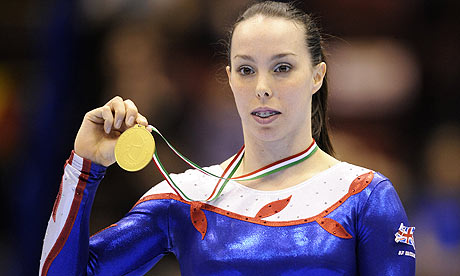
Get well soon Beth


I awoke this morning to some disturbing news. See: http://www.bbc.co.uk/sport/0/olympics/17843966


Now, there are lots of things to worry about in an Olympic year. You want all your favourites to hit their routines. You want minimal falls in team finals and AA to give as exciting a competition as possible. You want judging to be fair and accurate. The main worry though, for me at least, regards injuries: the worst possible thing to happen is for some of your favourites to be pulled at the last minute with an injury (Chellsie Memmel in Athens AND Beijing is a particularly heartbreaking example).

I will be totally honest here and admit that, of all the wonderful possibilities for London, by far my greatest concern is Beth Tweddle medalling on bars. Why?

1.       She is amongst my favourite currently competing gymnasts, which although biased is an important factor to state
2.       Her bar work has been world class for a decade, which I believe deserves Olympic recognition
3.       She has been the most innovative in the field for several years, and builds her difficulty through a variety of difficult combinations as opposed to repetitive pirouette work
4.       She must be under immense pressure, both from herself and from the British press

I understand Beth’s bars are not everybody’s cup of tea, but then again I am not suggesting that she necessarily win the gold (although I personally would like her to). I think most fans would struggle to deny that Beth’s routine is top 3 in the world right now.

But Beth has always has an inconsistent streak, sadly making somewhat of a habit of making errors in prelims. An injury and operation, however small, will have to affect her training time. I just hope this won’t affect her too much heading into the games.

As Beth herself says in the BBC article - better for this to happen now than later in the year, a sentiment with obvious truth. I just wish this didn’t have to happen whatsoever, and I am sure Beth does too. I hope it is what it sounds like: a minor operation with a good outcome, and that this knee does not become an Achilles heel.

GET. WELL. SOON. 

Tuesday, 17 April 2012

Competition of the competitions

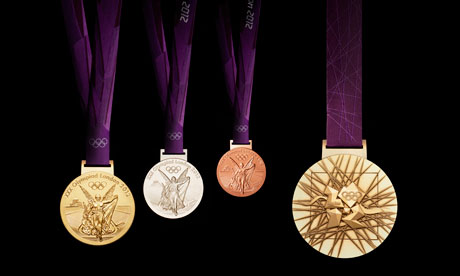
Are all gold medals equal?

What's in a name? that which we call a rose
 By any other name would smell as sweet”

...said Juliet, on the importance of names, in one of Shakespeare’s more famous works. The point is clear: name is name only, and doesn’t affect the properties of that which is gives title to.


To move away from this pretentious opener and towards something more on-topic, I had been wondering recently about podiums of all kinds in gymnastics, and the feelings of the competitors upon them who leave with the medals.

Why did I think this? I had just finished watching the 1992 Barcelona event finals (for perhaps the one hundredth time), and was specifically thinking about the beam final and one of my all time favourites, Svetlana Boginskaya. After a balance break in her EF beam exercise, a slim hope became a fools hope, and it was quickly clear that Bogi would leave her second Olympic games with no individual medals for her cabinet. This was summed up by Barry Davies:  “and Svetlana Boginskaya, down in fifth place, will leave these Olympic games without an individual medal, only the gold medal from the team competition”.

Sure, she had an Olympic gold medal: more than most ever achieve. But would she be happy with this? Is a gold medal a gold medal, regardless of its name? As with many things, people tend to have a subconscious naivety that others think the same as them: I realised I had never thought to ask how much stock other spectators hold in different competitions, and never speculated on what the gymnasts themselves think.

Personal Preference

If I was to personally rank the 3 gold medal opportunities (i.e. the three competitions taking place in world and Olympic competition) it would be in the following order of preference: 1.EF 2.AA 3.TF

Why? To me, gymnastics is first and foremost an individual sport. It is about how what gymnasts can do alone, how they perfect the skills and the personal touches they bring to their routines. It took me quite a long time to fully understand the excitement of the team competition: it was hard to get past the idea that it is just a series of individual routines falsely added together. Hence I still find it difficult to consider gymnastics as a sport of team importance because it always comes back to the individual (although this has changed increasingly with time - I have begun to appreciate the team tactics and the excitement of the team competition)

I like the AA a lot, but sometimes struggle with the idea that the winner is the best gymnast in the world, because it is consistency that always wins. I find that often the All Around champions are event specialists with boring but consistent routines on their weakest apparatus (I have discussed this opinion in more detail before, see: http://theepanel.blogspot.co.uk/2011/11/requiem-for-real-all-arounders.html ). But I appreciate the grit and determination of the individual fight, and in days gone by the AA was my standout favourite (back in a time where an AA crown took more than a mammoth bar routine and simple survival elsewhere, or something to the same effect)


For me, the best of the sport comes through in good event finals. We see top difficulty, top execution (not for vault, it must be said) and only the very best routines. Falls and mistakes take gymnasts out of the running in an instant, and there is the greatest potential for surprises, close battles and underdog victories. 

Poll

To get a sense of what other fans thought, I started a poll on the intlgymnast forum, which can still be viewed here: http://www.intlgymnast.com/forum/showthread.php?t=14587. As of the time of writing, the beautiful graphic below displays the results of this poll...


I was shocked to find that the overwhelming majority of fans prefer the Team Final, followed by the All Around, with Event Finals in last place.  Although this is not my own personal preference, I can see why people enjoy this. Some of the best moments in the history of the sport have come from Team Finals, and in a way this has softened me to Team Finals even more.

Looking to London

Perhaps bloggers say this before every Olympics, but I genuinely believe we are to be treated to one of the most exciting Olympics of All time. This is why, by competition....

TF - The USA have never seemed stronger, and their depth is now intimidating. As mentioned in several previous posts, the USA now has more confirmed Amanar’s than the rest of the world put together, and by a serious margin. This goes some way to illustrate their perceived dominance right now. However, this is not going to be a one horse race, and if they want to be the runway favourites to be the MAG5 they will have to seriously hope that Nastia and Becca can pull something fantastic out on bars. Why? Because the Russians certainly will. Besides this, the Russians did not have a single Amanar in Tokyo, nor did they have Grishina or Mustafina. With a few more higher scoring vaults and some great bars, that gap might be a whole lot smaller.


AA - The last time there were this many AA contenders, it was twelve years ago and everyone was gearing up for Sydney. As if symbolically, due to the mess that ensued, the Olympic AA competition has been paltry by comparison to 2000 ever since. But for the first time since, there is going to be competition for the top spot between more than two athletes. Sure, in Athens and Beijing there were others who could have contended, but it would have taken a fall from the top two in each case for this to happen. It is literally impossible to predict the top 3 AAers at this point, which is a different story to the last two Olympic Games.

EF - Sadly, EFs may take a hit a little at this Olympics. With tiny teams, specialists have a harder time and so we may see fewer athletes being brought for one routine for the team and one routine for EF. Some fields are looking depleted too: on vault, for instance, the probable lineup is really quite similar to Beijing. Furthermore, unless Pena cleans up that double front and takes the gold (which I think is not only improbable but would be bad for the sport - sounds mean, but that vault is scary) it may be the first time in modern gymnastics history where the OG gold medallist on vault wins with the same or less difficult two vaults as the previous OG winner (Maroney is the favourite if she makes the games, which is a huge if, and she is training a Mustafina and an Amanar).  The bars field is weaker than Beijing and will most probably be a battle between the Russians and Tweddle.


To conclude, it is interesting to hear how much stock the average gymnastics fan holds in the team competition. In a way, the TF is more relevant than ever: with such a tiny team it is clear that national coordinators will be putting the team first, followed by the AA and then the EF as an afterthought. It is unlikely that anyone will make it on the basis of one event.

Looks like a gold medal isn’t always a gold medal after all...
Thursday, 12 April 2012

Komova gearing up for London

A few quick thoughts on the videos circulating of Komova

I love training videos, they are so exciting! The first few glimpses at a new set of skills that your favourite gymnasts are getting set to perform. Sadly, the best training bideos are often of skills that never materialize (notably Sacramones front 1.5 salto double twist vault, Tweddles arabian full out on floor). But this close to the Olympics, and showing feasible and well performed skills, Komova's training videos hint at a gymnast on the rise.

Brought to my attention by a tweet by Gymnastics Coaching this morning

There are a few key facts that are very easy to forget about Komova...

1. She was far from her best last year. With all the hype that surrounds juniors, there is a tendency to rely only on what happens once they are seniors, as their competitions are larger scale and the video footage is far greater. But what we must bear in mind are the videos we used to see of Komova a few years ago. The beam and vault at the very least in Tokyo were sub-par by her standards (beam especially, lets not forget her jaw droppingly beautiful flight series combination ending layout stepout-arabian, and of course her Patterson dismount). With a return to better health who knows what we might see.
2. She has been a senior for a very short time. Because of the hype she may have been expected to be showing incredible routines instantly, but with a bit of time these athletes can really put together some fantastic difficulty. Gabrielle Douglas is a good illustrator of this.

That dismount looks fantastic. Sure, its overrotated, but who cares. What is more important to my eyes, is Komova herself. She looks so much stronger and healthier, and I bet this dismount is just scratching the surface of the skills she is planning for London.

Monday, 9 April 2012

Crack open the vault

We are witnessing the death of an apparatus. What happened to the vault?


Remember the 2000 Olympic vault final? I do. A Huge amount of tension surrounded the apparatus following the height mishap in the All Around competition, adding extra excitement to wat was already a great showcase of talent. The lineup was starstudded: lots of top all around competitors were present along with some wildcards like Laura Martinez, whose DTY had been super consistent during her stay in Sydney. There was a nice variety of vaults, high levels of execution, and the general feeling that the vault title was as prestigious and important as any other gold medal in the sport.

What the hell happened next?

Vault has undergone a major transformation since the millennium Olympics. Although vault was always an apparatus which benefitted a specialist (statistically, vault is the apparatus on which world champions have the greatest chance of repeating). However, in recent years the field has gone from slim to almost non existent.

If gymnastics were a company, vault specialism would be the IT department. Locked away in some basement somewhere and treated with less regard than other medal possibilities in the sport, vault has for a while now felt like a continuous footnote in gymnastics. In the All Around, the top group starts on vault, and there is ever the feeling that it is like a warm up for the other “real” events: something that most gymnasts simply “get through”. Even in the case of athletes who go for top shelf vaults, there is never the sense of truly perfecting an art on vault and making an all around impression there - it is ever an ambience of squeezing as many tenths from the throwaway apparatus to ease the pressure later on.

This is no coincidence, and could easily have been anticipated. With the open ended code, start value is everything as we have all come to know. The code demands exhausting routines on the other three apparatus, asking more of gymnasts than ever before. For an instance demonstrator of this, watch a bar routine form the 1992 Olympics: they look positively bare by comparison to today’s.

Gorgeous, and a worthy winner. But look how few skills there are compared to today

With so much time and investment having to be put in to learning huge quantities of skills and connections on other apparatus, it is no surprise that vault gets left out in the cold. This has two pertinent consequences for this apparatus....


1. Yurchenko fever. It would be erroneous to blame Yurchenko dominance on the open ended code, because Yurchenkos have been overperformed for about 30 years now. The main difference is that in the past, whilst most competitors used Yurchenkos in team and AA situations, they DID have a second vault and hence WERE familiar with other vaulting techniques. Now, one could attempt a different entry, but why would they? It is easier and more rewarding to chuck an extra twist onto a vault they already know. Hence everyone progresses towards an Amanar and that is that.
2. Some of the best vaulters don’t for event finals...because they don’t have time. Learning a second vault is hard work. Learning a cracking routine on any apparatus is hard work, but the key difference is that other routines can be used in a team situation AND in the All Around: these events are blind to a second vault. Therefore for someone like Jordyn Wieber, whose main focus is the All Around, doesn’t bother with a second vault even though she has the potential to be one of the world’s top vaulters.

So, the consequences of the code of points, and the fact that two vaults were only required in team and AA for one quad (97-00), is that the two vault field has got thinner and thinner. In 2008, only three of the 8 competitors were top 10 finishing all arounders. Compare this to 1992 where 7 of the 8 were top 10 AAers. In a way this is good as it indicates that specialism is more greatly accepted, but it is undeniable that vault medallists are not always the best vaulters or those with the best technique.

There is a greater problem exacerbating this. Hinted at above, the Olympic team format does nothing for the vault specialist. It is one of those points that gymnastics fans seem to universally agree on. That team size is just too damn small. For me, the 2008 6-3-3 format was too small so this new one is just a complete insult. Remember old team finals? Back when there were compulsories, 7 member teams? Back when to watch a full one you had to totally bed in, stockpile the supplies and unplug the phone? These days they are over in a flash. Vault specialists struggled to make teams at the best of times, but it was possible! Look at 2004, where the USA took Annia Hatch to Athens, allowing her to take a silver medal.

So to summarize the problems: vault is dying. Variety has gone and the gaps between vault D scores encourages the Yurchenko progression above anything else. Vault finals are paltry affairs with few competitors, and those that are present shouldn’t even really be considered specialists: they are simply ANYONE who can put two vaults of a semi decent start value to their feet. Finally, the stupid new team format is ruining the apparatus further: gymnastics talent tends to come from powerhouse countries, within which it is unwise to be a vault specialist because a second vault means nothing to the team. We are currently in a scenario where it is probably more likely for Jade Barbosa to make the Olympic vault final than it is for Mckayla Maroney, who will have to stamp her ticket somewhere else.

Vault can be a brilliant, exciting event. It can also be beautiful. Sadly, every current rule in the book seems to discourage athletes from perfecting their art on vault. We have lost execution, variety, depth and recognition. Vault has become a throwaway footnote in a sport of combination bonus and packed routines elsewhere.

I just hope we can get it back. The new vault final rules (see: http://theepanel.blogspot.co.uk/2012/03/cops-and-robbers-best-bits-of-draft.html) should make some difference, but ultimately I think the only longterm solution would be to reinstate the two vault requirement for teams and All Arounders. This way national teams would be forced to recognize specialisms, raising vault excellence to a level field with the other apparatus, and variety would be forced back into place. People would say this would be too demanding on the athletes, but it would be unfair to let vault take the hit for the exhausting nature of the other three apparatus. It isn't about difficulty: its about variety and execution.

Pictures: http://www.zimbio.com/pictures/DPP2xa_573f/2011+Visa+Championships+Day+2/iHd-aKD6d27/Jordyn+Wieberhttp://images.usatoday.com/sports/olympics/_photos/2004-08-23-hatch-ins.jpghttp://www.zimbio.com/pictures/z1x1rC-mNiV/Artistic+Gymnastics+World+Championships+Tokyo/FjBG76GxpE1/McKayla+Maroney